
Lizards are some of the most fascinating reptiles kept as pets, offering a wide range of sizes, personalities, and care requirements. However, one of the biggest mistakes new keepers make is assuming that all lizards can live in the same type of enclosure.
In reality, different lizards require very specific vivarium setups depending on their natural habitat. Temperature, humidity, lighting, substrate, and enclosure size all play a major role in a lizard’s health and lifespan.
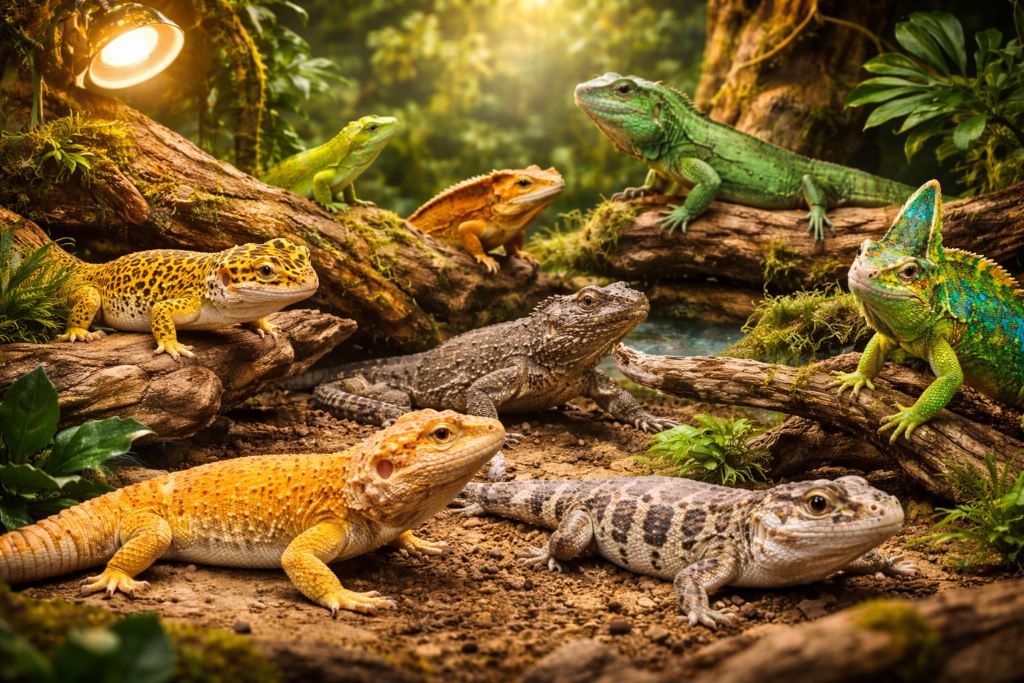
This essential guide explores 9 popular lizards and their preferred vivarium setup, helping you create the safest and most effective environment possible.
Why Vivarium Setup Matters for Lizards
Lizards are ectothermic, meaning they rely entirely on their environment to regulate body temperature. Unlike mammals, they cannot generate their own heat.
A correct vivarium setup allows lizards to:
-
Digest food properly
-
Absorb calcium through UVB exposure
-
Maintain healthy shedding cycles
-
Regulate stress levels
-
Display natural behaviour
Poor enclosure design is one of the leading causes of illness in captive lizards, making proper setup absolutely essential.
Leopard Gecko
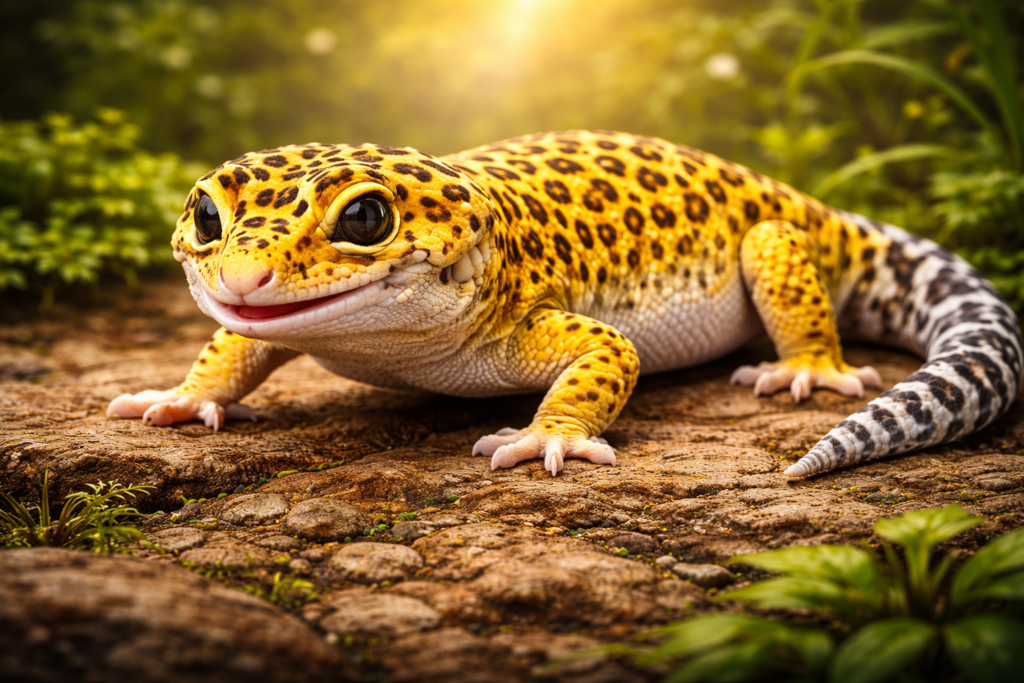
Leopard geckos are ground-dwelling desert lizards originating from arid regions of Asia.
Their preferred vivarium setup should focus on warmth rather than humidity. A horizontal enclosure works best, as leopard geckos rarely climb.
They require a warm side with a heat mat or heat source underneath, a cooler side for thermoregulation, and at least three hides: warm, cool, and moist. Low humidity is ideal, with a humid hide used only to assist shedding.
Substrate should be safe and non-loose, especially for juveniles. Lighting is relatively simple, though low-level UVB is now widely recommended.
Bearded Dragon
Bearded dragons are one of the most popular pet lizards due to their friendly nature and visible personalities.
Their vivarium setup must be spacious, as they grow quite large. A long enclosure with strong overhead heating is essential.
Bearded dragons require a powerful basking lamp that reaches high surface temperatures, combined with UVB lighting that spans at least two-thirds of the enclosure. Without UVB, metabolic bone disease can develop rapidly.
Their environment should be dry, with rocks and branches for basking and climbing. A clear temperature gradient is critical.
Crested Gecko
Crested geckos are arboreal lizards that thrive in vertical enclosures rather than horizontal ones.
Their vivarium setup should replicate a tropical forest environment. High humidity, climbing branches, cork bark, and live or artificial plants are ideal.
Unlike many lizards, crested geckos do not require intense heat. Room temperature is often sufficient, making them popular for beginners.
Misting is necessary to maintain humidity and allow drinking from water droplets on leaves.
Blue Tongue Skink
Blue tongue skinks are large, heavy-bodied lizards that spend most of their time on the ground.
They require wide, floor-based enclosures with strong heating and moderate humidity depending on the species. Indonesian varieties require higher humidity, while Australian species prefer drier conditions.
Their vivarium should include deep substrate for burrowing, large hides, and sturdy decor due to their weight.
Proper ventilation is essential to prevent respiratory issues.
Green Anole
Green anoles are small, active lizards that enjoy climbing and basking.
Their vivarium setup should be vertical, with branches, vines, and foliage. High humidity is required, along with regular misting.
Anoles benefit from strong UVB lighting and a basking area near the top of the enclosure.
Because they are fast-moving and easily stressed, they are best suited to observation rather than handling.
Uromastyx
Uromastyx lizards are desert specialists and require one of the hottest vivarium setups of any pet lizard.
They need extremely high basking temperatures and very low humidity. Their enclosure must be dry at all times.
Strong UVB lighting is essential, as uromastyx are herbivores and rely heavily on calcium metabolism.
A rocky, open layout with minimal decor works best for these sun-loving lizards.
Chinese Water Dragon
Chinese water dragons are semi-arboreal lizards that require both climbing space and water access.
Their vivarium setup should be tall and spacious, with branches, plants, and a large water area for soaking and swimming.
Humidity must remain high, often requiring daily misting or automated systems.
They also need powerful basking lighting and full UVB coverage to remain healthy.
Monitor Lizards (Juveniles)
Monitor lizards are highly intelligent reptiles with demanding care requirements.
Even juvenile monitors need large enclosures, deep substrate for digging, and intense heating.
Their vivarium must allow for natural hunting behaviour, climbing, and thermoregulation.
Due to their size and strength, monitors are best kept by experienced reptile keepers only.
Chameleon
Chameleons require one of the most specialised vivarium setups of all lizards.
They need tall, well-ventilated enclosures with live plants, drip systems, and precise humidity control.
Unlike glass tanks, mesh enclosures are often preferred for airflow.
Chameleons are sensitive to stress and handling, making correct enclosure design vital for survival.
Common Vivarium Mistakes to Avoid
Many issues with lizards come from incorrect setups rather than illness.
Using the wrong enclosure orientation, insufficient UVB lighting, incorrect temperatures, or improper humidity can all lead to serious health problems.
Every lizard species evolved for a specific environment, and the vivarium must replicate that environment as closely as possible.
Final Thoughts on Lizards and Vivarium Setup
Different lizards require very different vivarium setups. What works perfectly for a leopard gecko may be dangerous for a crested gecko or chameleon.
Understanding each species’ natural habitat is the foundation of responsible reptile keeping.
When set up correctly, lizards thrive, display natural behaviour, and can live long, healthy lives in captivity.
Taking the time to design the correct vivarium setup is not just recommended — it is essential.
Click Here to check out more guide on reptiles!