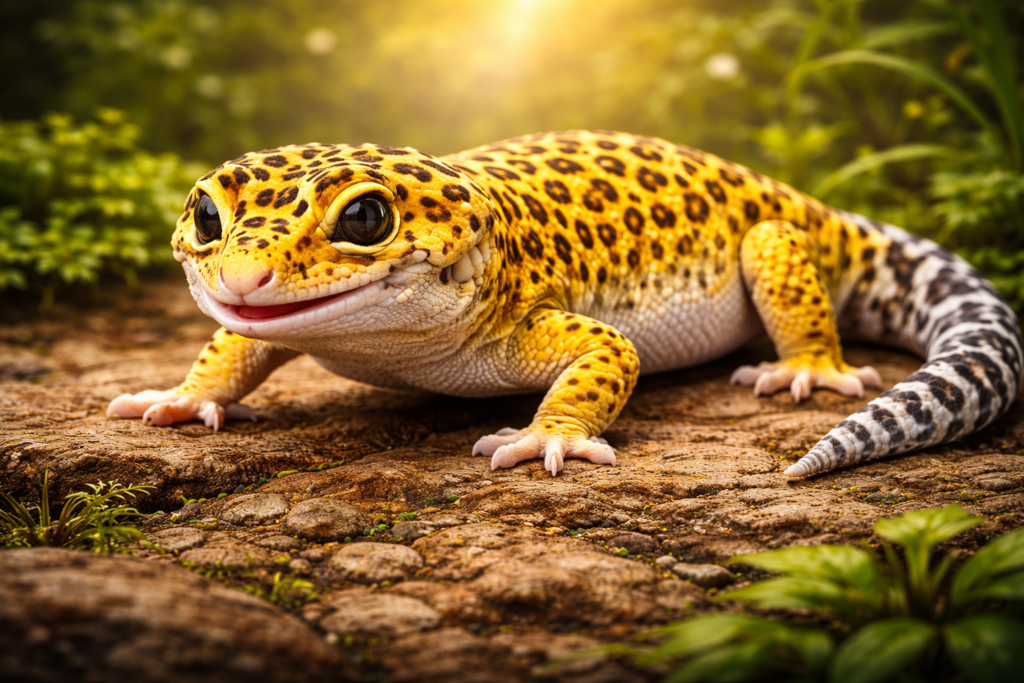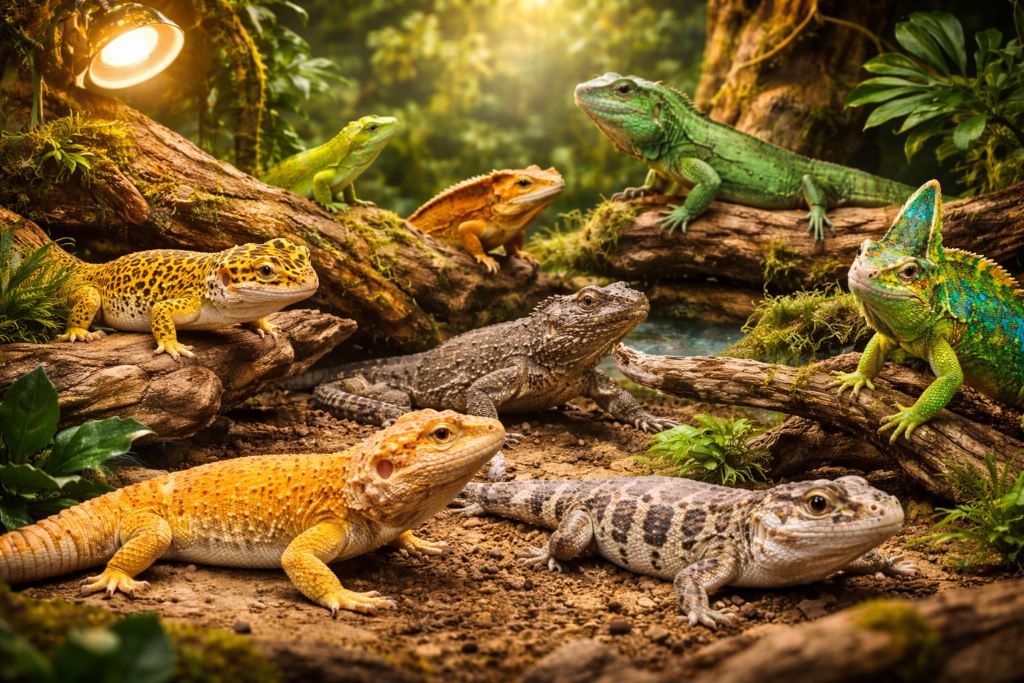
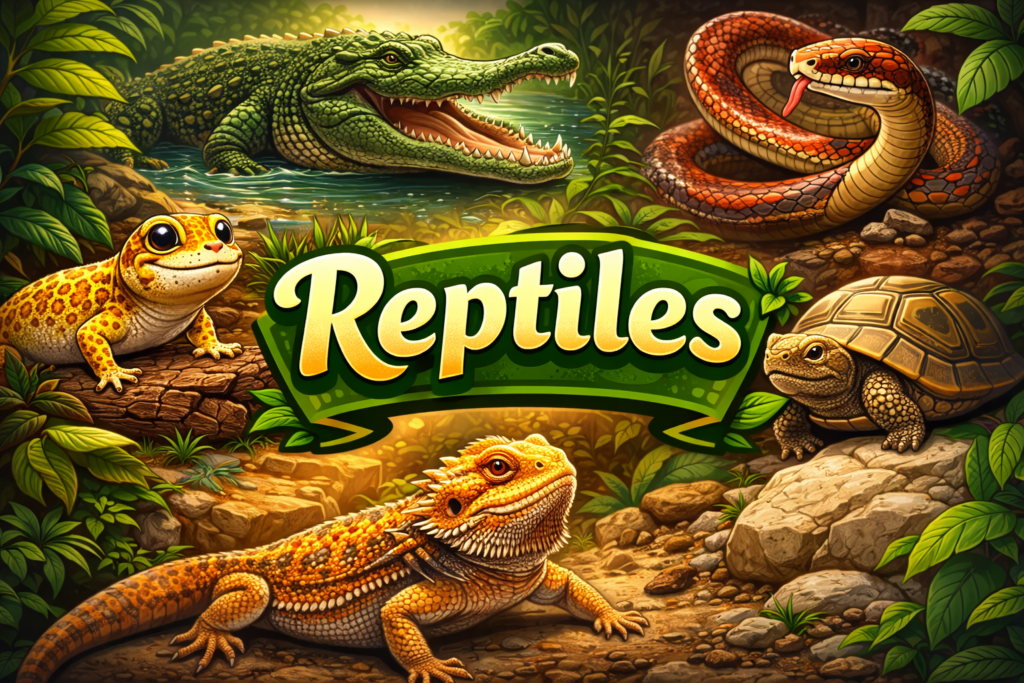

Reptiles are some of the most fascinating creatures on Earth. Known for their scaly skin, cold-blooded nature, and ancient lineage, reptiles have existed for more than 300 million years. Today, reptiles continue to capture the interest of animal lovers, researchers, and pet owners alike.
From snakes and lizards to turtles and crocodilians, reptiles come in many shapes, sizes, and behaviours. In this guide, we’ll explore the different types of reptiles, their characteristics, habitats, and what makes each group unique.
Whether you’re curious about reptiles in the wild or considering one as a pet, this in-depth guide will help you understand the incredible diversity of reptiles.
What Are Reptiles?
Reptiles are a class of vertebrate animals known scientifically as Reptilia. They are distinguished by several defining features:
-
Dry, scaly skin
-
Cold-blooded (ectothermic) metabolism
-
Laying eggs with leathery shells (most species)
-
Breathing through lungs
-
Typically long lifespans
Unlike mammals, reptiles rely on external heat sources such as sunlight to regulate their body temperature. This is why reptiles are often seen basking on rocks, logs, or warm surfaces.
Main Types of Reptiles
There are four main groups of reptiles living today:
-
Lizards
-
Snakes
-
Turtles and tortoises
-
Crocodilians
Each group has evolved unique traits that allow reptiles to survive in environments ranging from deserts and rainforests to oceans and wetlands.
Lizards
Lizards are the most diverse group of reptiles, with over 6,000 known species worldwide. They can be found on every continent except Antarctica.
Key Characteristics of Lizards
-
Usually have four legs (though some are legless)
-
Movable eyelids
-
External ear openings
-
Long tails (many can regrow them)
Lizards vary greatly in size — from tiny geckos just a few centimetres long to massive Komodo dragons exceeding three metres.
Common Types of Lizards
-
Leopard geckos
-
Bearded dragons
-
Chameleons
-
Iguanas
-
Skinks
-
Monitor lizards
Many lizards are popular pets due to their manageable size and calm temperament. Species like leopard geckos and bearded dragons are often recommended for beginners interested in reptiles.
Snakes
Snakes are one of the most recognisable reptiles in the world. Unlike lizards, snakes evolved without limbs and rely entirely on muscular movement.
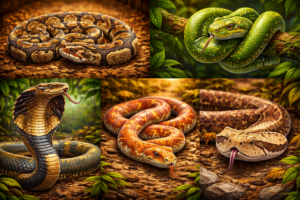
Key Characteristics of Snakes
-
No legs
-
Highly flexible jaws
-
Forked tongues for scent detection
-
Eyelids fused into transparent scales
-
External ears absent
Snakes use their tongues to “smell” the environment by collecting scent particles and transferring them to the Jacobson’s organ in their mouth.
Types of Snakes
-
Pythons
-
Boas
-
Corn snakes
-
King snakes
-
Cobras
-
Vipers
Not all snakes are venomous — in fact, the majority of reptile species within the snake group are non-venomous and pose little threat to humans.
Snakes play a vital role in ecosystems by controlling rodent populations.
Turtles and Tortoises
Turtles and tortoises are reptiles easily recognised by their protective shells. Their shells are actually part of their skeleton and cannot be removed.
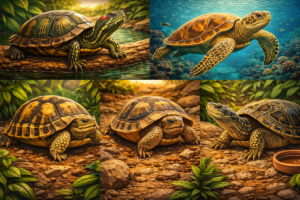
Differences Between Turtles and Tortoises
Although both are reptiles, they live in different environments:
-
Tortoises: Live on land, have dome-shaped shells and sturdy legs
-
Freshwater turtles: Semi-aquatic, spend time on land and water
-
Sea turtles: Fully aquatic with flippers
Common Species
-
Russian tortoise
-
Hermann’s tortoise
-
Red-eared slider
-
African sideneck turtle
-
Green sea turtle
Tortoises are known for their long lifespans — some reptiles in this group can live well over 100 years.
Crocodilians
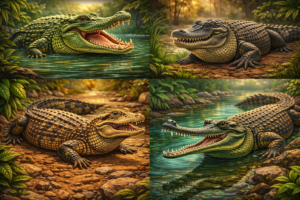
Crocodilians are the largest living reptiles and include:
-
Crocodiles
-
Alligators
-
Caimans
-
Gharials
These reptiles have remained largely unchanged for millions of years, making them living fossils.
Key Characteristics
-
Extremely powerful jaws
-
Armoured scaly skin
-
Semi-aquatic lifestyle
-
Excellent night vision
-
Strong parental instincts
Despite their fearsome reputation, crocodilians play an important role in maintaining healthy wetland ecosystems.
Where Do Reptiles Live?
Reptiles inhabit nearly every part of the world except extremely cold regions. Common habitats include:
-
Deserts
-
Rainforests
-
Grasslands
-
Rivers and wetlands
-
Oceans
-
Woodlands
Because reptiles rely on external heat, they thrive most in warm climates.
Why Reptiles Are Important
Reptiles contribute significantly to ecological balance:
-
Control pest populations
-
Serve as prey for birds and mammals
-
Maintain food chain stability
-
Indicate ecosystem health
The presence or absence of reptiles often reflects environmental changes, making them important indicators of habitat quality.
Reptiles as Pets
In recent years, reptiles have become increasingly popular as pets. Many people are drawn to reptiles due to their:
-
Quiet nature
-
Minimal space requirements
-
Fascinating behaviours
-
Unique appearance
Popular beginner reptiles include:
-
Leopard geckos
-
Bearded dragons
-
Corn snakes
-
Royal (ball) pythons
However, reptiles require specialised care including:
-
Proper heating
-
UVB lighting
-
Correct humidity
-
Species-specific diets
Responsible ownership is essential for reptile welfare.
Conservation and Threats to Reptiles
Many reptiles are currently under threat due to:
-
Habitat destruction
-
Climate change
-
Illegal wildlife trade
-
Pollution
-
Invasive species
According to conservation groups, nearly one in five reptile species is at risk of extinction.
Protecting reptiles involves habitat preservation, education, and ethical pet ownership.
Interesting Facts About Reptiles
-
Some reptiles can go months without eating
-
Certain lizards can detach their tails to escape predators
-
Snakes can detect heat using specialised sensory pits
-
Tortoises are among the longest-living vertebrates on Earth
-
Reptiles existed long before dinosaurs
These remarkable adaptations have allowed reptiles to survive multiple mass extinctions.
Final Thoughts on Reptiles
Reptiles are incredibly diverse, resilient, and ancient animals that continue to thrive across the planet. From tiny geckos to massive crocodiles, reptiles demonstrate remarkable evolutionary success.
Whether admired in the wild or cared for responsibly at home, reptiles deserve understanding, respect, and protection.
As interest in reptiles continues to grow, education remains the most important factor in ensuring their survival for generations to come.
Click Here to check out more guide on reptiles!